A brand experience strategy is a plan for shaping how people interact with, feel about, and remember your brand at every stage of the customer journey. It brings together your brand identity, messaging, customer experience, and engagement activities so that every interaction builds trust, encourages loyalty, and sets your business apart.
Promobile Marketing started with a single burger truck in New York City and grew into a national experiential marketing agency. Since then, we've built brand activations for names like Olive Young, Bobbi Brown, Dove, and Taco Bell, turning brand ideas into experiences people actually want to step into.
In this guide, we'll cover what a brand experience strategy is, why it matters, the elements it needs, and how to build one step by step. We'll also look at real campaigns we've produced and the mistakes that most often hold a strategy back.
What Is a Brand Experience Strategy? A brand experience strategy is a plan for how people interact with your brand and what they think, feel, and remember afterward. It covers your brand image, marketing messages, products, and services, plus every interaction you have with customers. Picture someone who walks into your store, scrolls your website, sees a social post, and then talks to one of your staff members. A brand experience strategy decides what you want that person to feel at each of those moments, and makes sure each one matches who your company is.
Good packaging and fun ads are part of it, but they aren't the whole picture. Customers should enjoy dealing with you, understand why you stand out, and get the experience they were hoping for. How easy it is to place an order counts. So does how friendly your service reps are.
It helps to separate three ideas that often get blended together:
Brand strategy defines what your business stands for: purpose, positioning, values, and identity.Customer experience is the quality of the interactions customers have along their journey with you.Brand experience is the thoughts, feelings, and reactions those interactions create.A brand experience strategy ties the three together, so the promises you make match what customers actually live through.
Take a skincare brand whose promise is to make skincare simple. Clear product displays, friendly representatives, free trials, useful social content, and fast customer service all deliver on that promise. However people find the brand, the experience feels familiar and warm.
Research supports this. In a study published in the Journal of Marketing , Columbia Business School's Bernd Schmitt and his co-authors examined brand experience across six studies. They identified four dimensions: sensory, affective, intellectual, and behavioral. They also found that brand experience affects customer satisfaction and loyalty, both directly and through how people perceive a brand's personality. What a brand sells matters, and so does how it feels to deal with it.
Why Is a Brand Experience Strategy Important? Think about the brands you keep going back to. Is it only because their products are good, or also because buying from them is easy, their staff treat you well, and their message feels like it fits you? Those small interactions add up. A strong brand experience strategy turns everyday contact with customers into reasons to return, recommend, and stay.
It builds emotional connections People connect with brands that make them feel valued, understood, or excited. A customer who tries a new product, joins an interactive activation, or gets genuinely helpful service is more likely to remember the business behind it. Over time, those moments can turn satisfied customers into loyal ones, and loyal ones into advocates.
It makes your brand easier to recognize and trust When your visual identity, messaging, service, and promotions all say the same thing, people start to associate that feeling with your name. Customers also expect you to keep your promises. If your ads promise excellent service and customers then struggle to get help, the gap hurts. Meeting expectations on your website, in stores, on social media, and in support channels gives people reasons to trust you and come back.
It gets customers involved Instead of asking people to look at an ad, give them something to explore, try, or take part in. Games, product sampling, live demonstrations, contests, and pop-up experiences give customers a reason to spend more time with your brand. They also open direct conversations, so you can gather feedback and learn what your audience enjoys.
It helps you stand out When lots of businesses sell similar things, how you make customers feel can become the reason they choose you. A memorable activation or a personal touch gives your company an edge that pricing and product features alone can't.
It gets people talking Most of us have tried something at an event and immediately wanted to tell a friend. That is exactly what brands hope for. When customers enjoy an experience, they post photos, videos, and reviews, and they talk about it face to face. Word of mouth carries your brand to new people and builds trust with potential customers along the way.
Key Elements of an Effective Brand Experience Strategy Memorable brand experiences don't happen by accident. You need to know what your brand stands for, who you want to reach, and what you want them to feel when they engage with you. These six elements do most of the work.
Brand Identity and Messaging Start with a clear mission and core values. Your brand's personality, tone of voice, and visual style should guide how you communicate on every channel. If you promise simplicity, your website, packaging, customer service, and in-person events should all make things feel easy. Customers then know what to expect from you.
Understanding Your Target Audience You can't build a strong experience without knowing who it's for. Learn your customers' needs, interests, expectations, and buying patterns. Customer feedback, market research, customer profiles, and social media insights all show what people care about, which makes it much easier to design experiences that land.
Customer Journey and Touchpoints List every step of the journey: discovering your company, visiting your website, speaking with your team, buying, and getting help afterward. Each touchpoint adds to the overall experience, so each one should be smooth and pleasant. Someone who finds your product on social media should get the same positive experience in your store or when they meet a brand representative in person.
Emotional Connection Think beyond the products you offer and decide which emotions you want people to link with your brand. Enthusiasm? Confidence? Feeling valued or inspired? Personal touches, memorable moments, and attentive service all help, as long as they fit who you are. People remember brands they feel close to.
Consistency Across Channels Your brand should feel recognizable wherever people meet it, whether that's social media, a store, an ad, or an event. That doesn't mean everything has to look identical. Each interaction just needs to reinforce the same brand promise, because mixed signals confuse customers and wear down the trust you've built.
Personalization and Engagement Make participation more attractive than watching. Personalized product suggestions, hands-on demos, contests, tastings, and social promotions all make an interaction more meaningful. Experiences like these show people you see them as individuals, and they create more chances to build a lasting relationship.
How to Develop a Successful Brand Experience Strategy A few great campaigns or striking displays won't carry a strategy on their own. You need a clear picture of your audience, defined goals, well-planned interactions, and touchpoints that deliver on your brand promise. You don't have to solve everything at once, though. These seven steps will get you there.
1. Define Your Brand Experience Goals Before planning any activity, decide what you want it to accomplish. Launch a new product? Raise awareness? Build loyalty, generate leads, or get more people to try what you sell? Clear goals keep you focused on experiences with a purpose rather than ones that are just flashy.
If you're introducing a new beverage, your goal might be to drive trial among new customers, which points toward sampling events at malls, grocery stores, and busy public spaces. If retention is the priority, personalized offers, loyalty rewards, and exclusive experiences for existing customers make more sense.
Whatever you choose, make the goals measurable. Track how many people you reach, samples handed out, sign-ups, sales, or changes in customer satisfaction, so you can tell whether the strategy is working.
2. Understand Your Target Audience Ask what your audience enjoys, what problems they're trying to solve, and where they spend their time. Then research existing and potential customers: age groups, interests, buying habits, preferences, and pain points. Surveys, customer interviews, online reviews, social listening, and past campaign reports are all useful. So is feedback from the employees who talk to customers every day.
The U.S. National Institute of Standards and Technology recommends that businesses listen to customers through interviews, feedback, focus groups, social media, and surveys, and use what they learn to improve or customize their products and services.
The answers shape the format. Young adults might respond to an interactive pop-up with games, product trials, photo ops, and social challenges. Busy professionals may prefer quick product demonstrations or personalized experiences at industry events.
3. Map the Customer Journey Journey mapping shows how people find and engage with your brand, from the first ad they see to the purchase and the service that follows. It also shows where they get frustrated or lose interest.
Break the journey into stages: awareness, consideration, purchase, and post-purchase. Then list the channels and interactions at each stage. Someone might see a Facebook ad, visit your site, watch a product demo, buy, and contact customer service later. At each point, check whether the experience delivers what you promise. Is the website easy to use? Do demos hold attention? Does customer service answer quickly? The goal is a smooth, connected experience online and in person.
Here's how that looks for a product sampling tour. Before the event, social posts and local listings tell people where the truck will be. On site, a short line, a friendly ambassador, and a sample in hand within minutes make the first impression. Afterward, a follow-up email or a QR code that leads to a discount gives people an easy next step. A weak link at any of those three stages can undo the good work at the other two.
4. Create Experiences That Reflect Your Brand Identity Turn what your brand stands for into something people can see, touch, and take part in. Ads can describe your promise; experiences let people feel it.
Tech brands can use interactive technology, product demonstrations, or large installations. Playful brands can bring games, contests, entertainment, and colorful pop-ups. Community-minded businesses can host workshops and events that bring people together.
Whatever you choose has to be authentic. A flashy activation that doesn't match your values or products risks a familiar result: people remember the event and forget the brand.
5. Choose the Right Channels and Engagement Activities Use more than one channel. Experiential marketing, live events, digital platforms, and everyday customer interactions all play a part. You might send a mobile tour to introduce a product in several cities, set up temporary displays in malls, or run live demonstrations at trade shows. Social campaigns, influencer partnerships, interactive content, and contests keep the conversation going after the event.
Live experiences also push people to act. A 2026 survey by the Out of Home Advertising Association of America and The Harris Poll found that 89% of U.S. adults are open to attending a live marketing event or promotional activity. Of those who interacted with a live event in the previous two months, 40% made a purchase while there and 37% visited the website.
Match the activity to the goal and the audience. If people need to understand how something works, hands-on trials beat static displays. If awareness is the aim, mobile tours and interactive pop-ups reach more people and create memorable moments.
6. Plan the Execution and Logistics Good ideas need careful planning. Work out the budget, timing, locations, permits, equipment, staffing, and marketing materials. Multi-city programs add transportation, venue arrangements, and setup schedules.
Your team matters as much as the event. Hire and train brand ambassadors who know your products, communicate clearly, and can get different kinds of people involved. Give everyone a clear brief about their role and the experience you want to create.
Before launch, confirm the basics for every location:
Permits and venue approvals, in writing Power, water, and equipment needs Staffing levels, shift times, and a point person on site Product inventory, with extra stock for busy days Load-in, setup, and breakdown times Have backup plans ready. Equipment fails, venues change, and delays happen. A contingency plan keeps the campaign running smoothly and the experience consistent at every location.
7. Measure and Improve Your Brand Experience Look at results and listen to customers. Start with metrics tied to your goals: event attendance, engagement, product trials, social mentions, leads, sales, brand recall, and customer satisfaction.
Numbers only tell part of the story. Short surveys, online reviews, social comments, and direct conversations show what people liked, what confused them, and what you could do better. Net Promoter Score (NPS) shows how likely customers are to recommend you.
A simple way to choose metrics is to start from the goal:
Awareness: reach, impressions, social mentions, and branded searchTrial: samples distributed, demos completed, and sign-upsSales: redemption of event-specific codes and sales lift in nearby storesLoyalty: repeat purchases, NPS, and engagement from existing customersThe U.S. General Services Administration's Customer Experience Playbook suggests tying metrics to the moments that matter in the customer journey and keeping surveys simple, with few, straightforward questions. That way you can see exactly where to improve instead of guessing.
Then use what you learn. If product demos are popular but people can't find the products afterward, make the path from engagement to purchase easier. If one location draws far more interest than another, find out why. Keep testing, keep listening, and adjust as expectations change. A brand experience should grow along with your company and your customers.
7 Brand Experience Examples That Inspire The best way to understand a brand experience strategy is to see one in action. We selected seven examples here, mostly based on events we've hosted , and each one gave people something to look at, play with, explore, or join.
1. Interactive Product Demonstrations When Olive Young partnered with Sephora, we built a K-Beauty discovery experience around a custom glass truck, with product sampling, beauty demonstrations, sticker selection, and a hands-on "Scooping Experience." Over six live days in New York City, Austin, and Miami, the Olive Young activation welcomed 6,547 attendees and handed out 5,920 sample scoops. Each stop sat near a Sephora location, so the next step after trying a product was a short walk away.
2. Game-Day Sampling Experiences Meet customers where they already gather. For Chobani, we set up cube carts and branded vehicles to hand out samples to fans before baseball and soccer games and at tailgates. The Chobani program handed out 13,556 samples over five days of live events. Fans got a free snack when they were already excited, and the brand became part of the fun on game day.
3. Experiential Mobile Tours Sometimes the best move is to take your brand to people instead of waiting for them to come to you. For Bobbi Brown's #InMySkin campaign, we wrapped a glass box truck and sent it across 16 states. Makeup experts color matched guests to their palette, guests got a "glow up" on board, and visitors wrote affirming messages about their skin on the truck's mirror-finish side. The Bobbi Brown tour reached more than 250,000 guests and distributed more than 400,000 product samples.
4. Immersive Brand Activations Sometimes the most memorable moments leave people feeling as if they've entered a different reality altogether. Immersive activations combine creative installations with technology, lighting, sound, and interactive activities to let a brand tell its story in a vivid way. Imagine a company promoting a new movie. It sets up themed installations where people wander through recreated movie scenes, snap pictures, and take part in interactive challenges. Instead of passively watching an ad, visitors become part of the story.
5. Personalized Customer Experiences People can tell when a brand has taken the time to understand what they need. Personalized interactions come from a brand's insight into individual customers' likes and habits. A skincare brand might offer consultations and suggest products that address each visitor's specific skin concerns. An online store can suggest items based on what shoppers browse and buy. Little details like this show customers you care about them and keep them coming back.
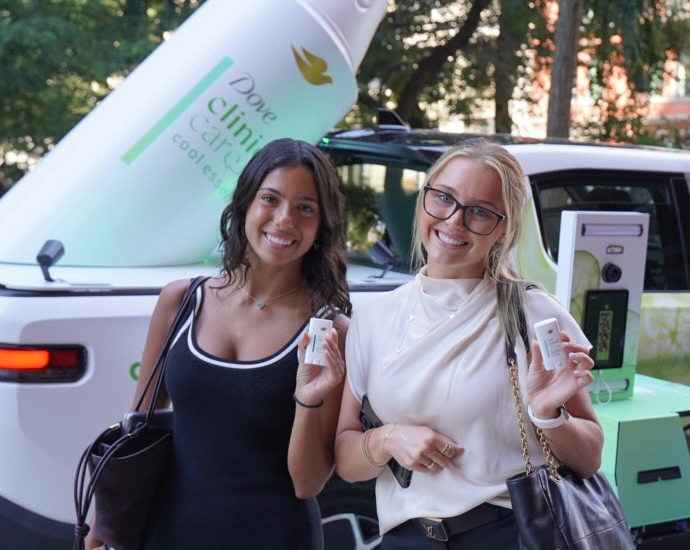
6. Community-Based Brand Experiences A brand can build real connections by showing up for the communities its customers care about. Dove wanted to promote body confidence in young girls and help them stay in sports longer. During Super Bowl week in Las Vegas, we helped connect young female athletes with celebrity flag football coaches Venus Williams and Steve Young, while our Dove-branded food truck served more than 400 servings of tacos, coffee, and hot chocolate. The Dove activation tied the brand to a cause its audience cares about, the kind of association that lasts beyond the event.
7. Digital and Physical Brand Experiences You don't have to choose between online and in person. When Taco Bell launched TBX, its program spotlighting emerging chefs, the launch happened live on stage and over livestream at the Live Más LIVE event. We fabricated a fully customized Taco Bell food truck that served the chefs' new takes on the Crunchwrap Supreme, with a DJ, a photo op, and an onsite manicure salon. The Taco Bell activation served more than 2,000 Crunchwrap Supremes and generated more than 25,000 direct and indirect impressions from event pop-ups.
Common Brand Experience Strategy Mistakes to Avoid A good idea can still fall flat if the execution doesn't meet customer expectations. The table below covers the mistakes we see most often at the strategy level.
Common Mistake
Why It Matters and How to Avoid It
Focusing on looks instead of customer needs
An attractive activation catches attention, but it won't mean much if people have little reason to take part. Choose activities that meet real needs, invite interaction, and offer value, such as product trials, demos, and games.
Creating experiences that don't match your brand identity
A creative campaign confuses customers if it doesn't reflect your personality, messaging, or values. Make sure every activity says what your business stands for.
Ignoring the customer journey
Polishing one interaction while overlooking the rest leaves gaps. Consider every touchpoint, from discovery to purchase and after-sales support.
Letting touchpoints drift apart
Customers should get a familiar experience online, in store, and at live events. Keep messaging, visual identity, and service standards aligned across channels.
Overlooking brand ambassador training
Ambassadors are often the people customers actually talk to, so their behavior shapes how people see your brand. Train them to know your products and engage people in a friendly, professional way.
Not measuring performance
Without tracking results, you can't tell whether the strategy is hitting its goals. Monitor engagement, feedback, brand recall, participation, and conversions.
Want to Create Memorable Brand Experiences? A great brand experience strategy is one thing. Bringing it to life in a way that gets people excited, encourages participation, and keeps your brand top of mind is another. That's where Promobile Marketing comes in.
From concept to execution, we handle the details that make an idea work. Whether you want to take your products on the road with multi-city mobile tours, run product sampling and demonstrations, or build an interactive pop-up, our team can help you bring it to life. We also take care of the behind-the-scenes work, from sourcing and training brand ambassadors to logistics, permitting, and staffing, so every interaction reflects your brand.
Ready to give your customers an experience worth remembering? Contact us and let's bring your next big idea to life.