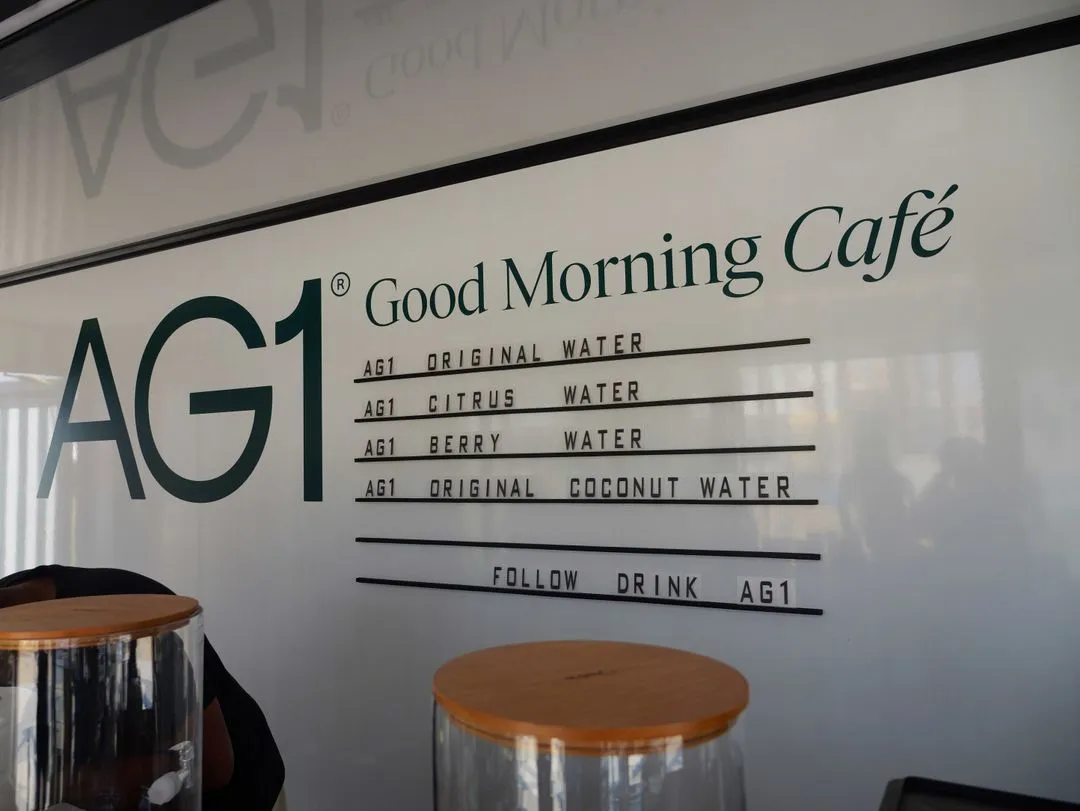
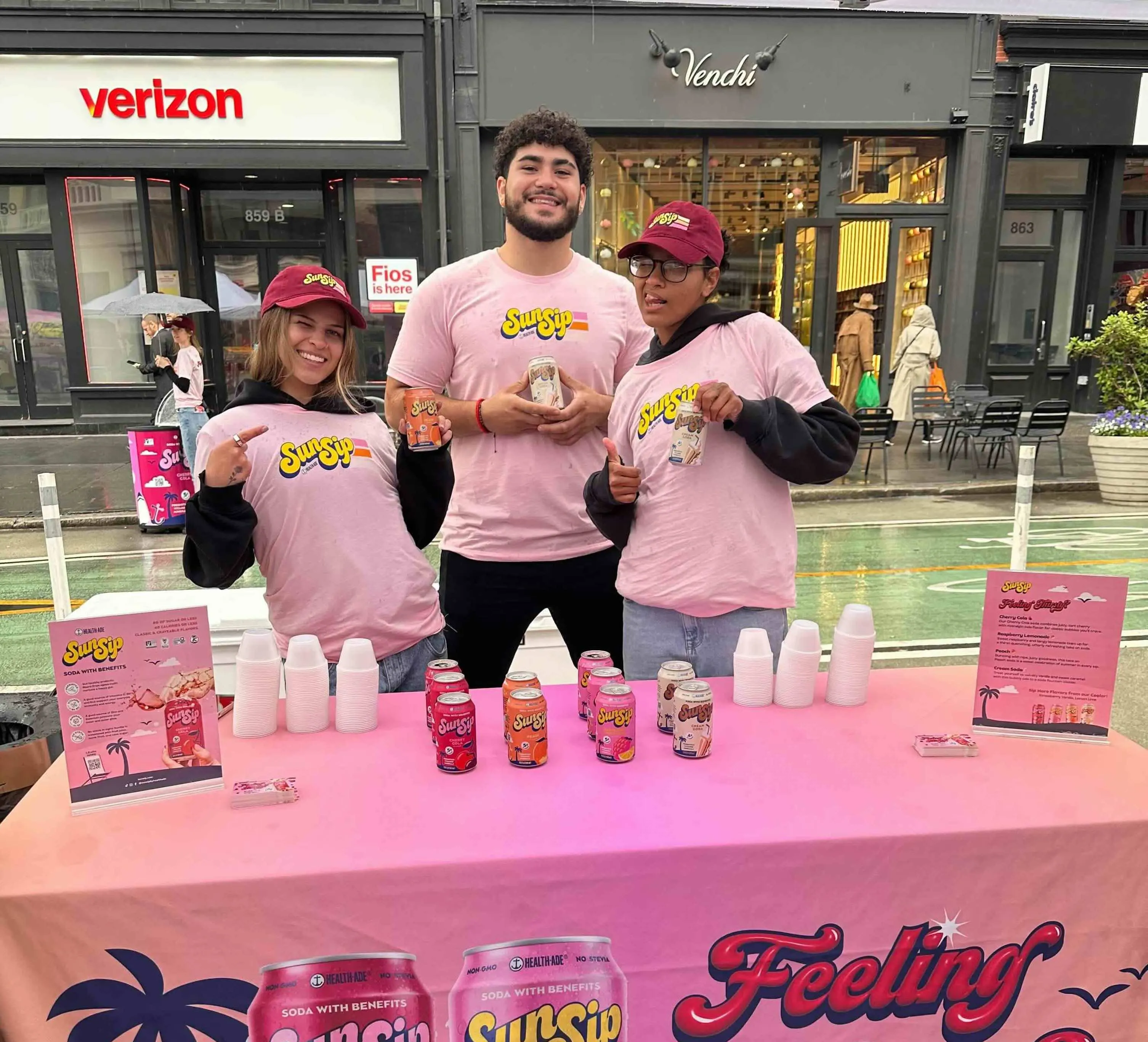
The creative product sampling ideas for retail success that actually work are the ones measured on what happens at the shelf afterward, not by how many free samples went out . A campaign that distributes 100,000 units to existing customers has spent its budget confirming something the brand already knew. The number that matters is how many of the people who tried it had never bought it before.
Promobile Marketing is an experiential marketing agency working out of Dock 72 in Brooklyn, built by a team of more than thirty after its founders spent their savings on a single burger truck that turned into a fleet. Our CPG sampling programs have put product in hand for OLIPOP, Liquid I.V., Yerba Madre, Newman’s Own, and Mush and Momofuku, with culinary work alongside chefs José Andrés and Dominique Ansel. The figures in this article come from those campaigns rather than from an industry survey, so contact us to see what the equivalent would look like for your product.
This article covers the best product sampling ideas grouped by where they intercept the shopper, along with how retail sampling formats compare and how to measure success properly.
What Makes a Retail Sampling Campaign Work Product sampling puts a product directly into a consumer’s hands so they can try it before buying. At retail, four things separate successful product sampling campaigns from ones that empty a budget, and none of them is the number of samples distributed. Get these right, and a sampling initiative builds brand loyalty as well as trial.
Proximity to the Point of Purchase The closer a sample sits to the moment a shopper can act on it, the more of that trial converts. A sample handed out inside a store where the product is stocked can become a purchase in ninety seconds. The same sample handed out two miles away depends on the person remembering the brand on a future trip, which most will not. Immediate availability of the sampled product is the single largest multiplier on any sampling initiative, and it costs nothing to plan for. Nothing else you can do will drive in-store sales as reliably.
Matching the Sample to the Target Demographic
Sampling more people is not the same as sampling the right audience, and the two often pull in opposite directions. Volume is easy to buy; reaching your target audience is the part that takes planning. A high-traffic transit hub delivers volume. A boutique fitness studio delivers fitness enthusiasts, a target demographic that already buys in the category. Choosing sampling locations on footfall alone is the most common way a budget gets spent without converting anyone, because the cost of a sample is the same whether it reaches one of your potential customers or a passerby who will never buy.
Staffing That Can Answer a Question The interaction that converts a shopper is usually a question answered well rather than a sample handed over. Brand ambassadors who know the product can address the objection standing between trial and purchase, whether that is an ingredient, a price point, or a comparison with the brand the shopper currently buys. Staff trained only to distribute will hit their sample count and convert a fraction of what a trained team would, and a productive conversation is where customer loyalty starts.
Capturing Data While the Sample Is in Their Hand Consumer insights are only collectable at the moment of contact. This includes whether someone had bought the product before, what they thought of it, which store and which hour performed best, and their email address if they are willing to provide it. None of that can be reconstructed afterward from a sample count, and a campaign that skips it produces a total rather than a finding.
How Retail Sampling Formats Compare Brands usually compare sampling formats on cost per sample, which is the least informative number available. A cheap sample delivered far from the shelf can be worth less than an expensive one delivered beside it. The table below compares the formats in terms of proximity to purchase and what each one actually tells you afterward.
Format
Where it happens
Cost basis
Proximity to purchase
Data captured
Best suited to
In-store demo
Inside the retailer
Per store, per day
Highest
Redemption, same-trip conversion
Products already on shelf
Mobile sampling tour
Streets, events, campuses
Per activation day
Medium
Volume, new-to-brand rate, capture
Launching into new markets
Guerrilla sampling
Public high-traffic areas
Lowest per contact
Low
Volume and reach only
Awareness on a small budget
Digital product sampling
Online, shipped to home
Per sample plus fulfillment
Low but trackable
Full transaction and follow-up data
Testing demand before retail
Subscription box insert
Inside another brand's box
Per insert
Low
Redemption via code
Reaching a defined niche
The key factor that drives most retail programs is proximity to purchase. In-store sampling puts the product into a shopper’s hand at the moment they are able to buy it, which is a mechanical advantage no other format has.
That advantage does not make it the right answer every time, and the current evidence is worth knowing before committing a budget to it. A randomized field experiment published in the Journal of the Academy of Marketing Science in January 2026 tracked households for eighteen months across three sampling channels and measured acceptance, usage, purchase conversion, and engagement. It found online request sampling the most cost-effective, direct mail the strongest driver of long-term engagement, and in-store sampling limited in sustained engagement.
The practical reading is that the channel should follow the time horizon of the goal rather than the other way around. In-store sampling suits driving trials where distribution already exists and purchases can happen immediately. Reaching people who are not in that store, or building a relationship meant to last beyond the trip, is work the other formats do better, which is why brands entering new markets usually run mobile programs first and add in-store demos once the product is on shelf.
Sampling Ideas That Work Inside the Store In-store sampling is the oldest format in retail and still the most direct, because it collapses the distance between trying a product and buying it to a few steps. It is also the fastest way to introduce a new product to shoppers already standing in the category. The ideas below are about placement and timing rather than about the sample itself.
Place the Demo at the Point of Decision A sampling station positioned at a store entrance catches everyone and converts few, because shoppers are still exploring other categories and lack the intent to purchase. The same station, placed in the aisle where the product sits or directly opposite the competitor a shopper is comparing against, converts a far higher share of the same footfall. High-traffic areas matter less than high-intent areas.
Pair the Sample With an Immediate Discount Code A sample answers whether someone likes the product. Discount codes attached to it answer whether they will buy it today, and they make the campaign measurable. Creative packaging on the sample itself helps it stand out in a busy aisle. Redemption gives a clear conversion figure rather than an estimate, and a short expiry keeps the purchase inside the trip where the trial happened.
Run Wet Sampling for Food and Beverage Wet sampling, where the product is prepared and served rather than handed over sealed, gives a sensory experience that a trial size in a wrapper cannot. It also removes the friction of the shopper having to try it later, which is where most sealed samples are lost. The competition for a grocery shopper’s appetite has never been tougher, with USDA Economic Research Service data showing 2025 as the first year Americans spent a greater share of income on food away from home than on food at home, so anything that makes a packaged product taste like a prepared one is working against a real headwind. Culinary staffing costs more per store, but it converts significantly better, making it worthwhile in food and beverage.
Time the Demo to the Store’s Traffic Peaks The same demo in the same store performs differently on a Thursday morning and a Saturday afternoon, and most brands book by availability rather than by traffic. Retailers hold that data and will usually share it. Booking the hours when the target shopper is actually in the store is the cheapest gain available in retail sampling.
Sampling Ideas That Reach Shoppers Before They Reach the Shelf Sampling away from the store solves the problem in-store cannot, which is reaching people who do not yet buy the category or shop at that retailer. These formats trade proximity for reach and for the ability to filter who receives the sample.
Mobile Sampling Tours That Feed Retail Markets A mobile program can concentrate sampling in the specific markets where distribution has just landed, which turns a national launch into a series of local ones. OLIPOP is a useful example of what that looks like at scale. OLIPOP’s The Pop Stop ran 48 activations across four markets over four months, covering more than 7,000 miles and distributing 128,658 cans. Thirty five percent of participants were new to OLIPOP, and that percentage is what converts the campaign into a cost per new customer rather than a cost per sample.
Venue-Filtered Sampling Choosing venues that filter for the right audience beats choosing venues that maximize headcount. Mush ran its Breakfast Club across 133 boutique gyms and studios, distributing 56,658 products and reaching 96 percent of the program goal. 62% of sampled consumers were new to the brand, a rate that is almost entirely a function of where the sampling happened rather than of what was handed out.
Campus Sampling at Scale College markets reward sampling more than most channels because the audience is dense, walkable, and renewed every year. Yerba Madre’s University of Yerba ran 27 weeks across 154 campuses in thirty cities, distributing 324,000 samples against a target it exceeded and generating 884,600 tour impressions. Building preference in a cohort before their spending rises is a longer payback than a retail demo and a considerably larger one.
Sustained Sampling Over One-Off Events A single large sampling day produces a spike that decays before it reaches the shelf. Liquid I.V.’s Hydration Nation sampled more than 1.1 million sticks across 160 live activation days in fifteen cities, and the activation day count is the more useful figure. Repeat exposure in the same market is what turns a trial into a habit, and habit is what shows up in reorder data.
Sampling Paired With a Live Demonstration Some products need to be shown rather than tasted, especially when the barrier is knowing how to use them. Newman’s Own Pay What You Want distributed 1.2 million samples alongside 3,000 demos and generated well over 20 million product impressions. A demonstration also gives staff a reason to hold a shopper’s attention long enough to answer the question that decides the purchase.
Guerrilla Sampling in High-Traffic Areas Guerrilla sampling uses small mobile teams to distribute samples in public spaces without the cost of a venue or a build. It buys reach cheaply and buys very little data, so it works as an awareness layer beside a measured program rather than as the program itself. Brands that treat it as their whole sampling strategy end up with a volume figure and no idea who received anything, which is why guerrilla work belongs alongside more accountable sampling efforts rather than in place of them.
Digital and Hybrid Sampling Ideas Digital product sampling is cost-effective and fully trackable, and it reaches people no field team can. Brands send samples directly to homes, retarget recipients with paid ads afterward, and measure the whole chain. The channel is growing for the same reason retail is shifting, with e-commerce reaching 16.9% of total United States retail sales in the first quarter of 2026 and expanding at 9.8% against 3.9% for retail overall, according to the Census Bureau . What it cannot do is put the product in someone’s hand at the moment they can buy it, so the strongest programs use it to extend a physical campaign rather than replace it.
QR Codes That Turn a Sample Into a Tracked Visit A QR code on the sample packaging connects a physical handoff to a digital record. The QR code can route to a recipe, a review form, a discount code, or a store locator, and each of these options returns data that the sample alone would not provide. Smart packaging turns a one-way distribution into a measurable interaction.
Subscription Box Inserts and Trial Sizes Subscription boxes deliver trial sizes to a defined audience that has already opted into discovery, which removes the targeting problem entirely. Offering samples this way puts sample products in front of people actively looking for something new. The tradeoff is distance from the shelf, so inserts carry a code to make redemption countable. It suits brands whose product needs several uses before the benefit is obvious.
Micro-Influencer Seeding and Exclusive Samples Sending exclusive samples to a select group creates user-generated content the brand does not have to produce. Micro-influencers convert better than large accounts in most categories because their audiences behave like communities rather than broadcast, and the cost per placement is a fraction of a paid campaign. Seeding this way can increase brand awareness and build loyalty among people who already trust the person recommending you.
Sampling That Builds Reviews Before Launch
Pre-launch sampling generates reviews so that a product does not arrive on the shelf with an empty ratings page, which is a genuine conversion barrier online and increasingly in store. It also surfaces objections while there is still time to address packaging, flavor, or positioning. Feedback collected before launch is worth more than the same feedback collected after it.
Sampling Tied to a Retail Launch Sampling timed to a launch or a new retail partnership does two jobs at once: building trial and giving the retailer evidence that the brand will support the listing. Retailers notice which brands drive traffic to their stores.
Purely Elizabeth’s Protein Pop-Up Purely Elizabeth’s protein pop-up in Venice Beach produced more than 5,000 engagements and 1,600 servings, and the outcome that mattered commercially was that it led to an expanded partnership. A sampling campaign that earns more shelf space has returned more than its sample count suggests.
Retail Partnerships With Marshalls and Walmart Promobile has run in-store and retail-adjacent programs with Marshalls and Walmart , where the objective was driving foot traffic and trial inside an existing retail footprint rather than building a standalone experience. Retailers plan programs of that kind around their calendar and store operations, which constrains timing far more than a street-level activation does.
How To Measure a Retail Sampling Campaign Most sampling reports lead with samples distributed, which is an input rather than a result. Measuring success means connecting what went out to what happened commercially, and that requires deciding what to capture before the first sample is handed over. A trial converted into a repeat purchase is how sampling turns into market share.
Cost Per Sample and Cost Per New Customer Cost per sample is easy to calculate and tells you almost nothing, because it treats every recipient as equivalent. Cost per new customer divides the same spend by the people who had not bought the product before, and it is the figure that allows a sampling campaign to be compared against a paid media buy on equal terms.
New-to-Brand Rate, the Number Most Campaigns Never Capture The share of people sampled who were new to the brand is the most valuable measure in retail sampling and the one most programs fail to collect, because it requires asking a question at the point of contact rather than counting units. OLIPOP’s 35 percent and Mush’s 62 percent exist because someone built that question into the interaction. Without it, a campaign cannot distinguish between recruiting new buyers and handing free product to loyal customers who would have bought anyway.
Redemption and Sell-Through Coded offers give redemption, which is the clearest direct evidence that a sample produced a purchase. Sell-through data from the retailer provides the closest thing to a controlled read that retail allows when compared across sampled and unsampled stores over the same period. Running demos in a subset of stores and holding the rest as a baseline costs nothing extra and turns the whole program into a measurable test. What one campaign proves about placement is what makes the next campaign cheaper.
How To Choose a Product Sampling Company The gap between sampling agencies is not creative; it is operational, and it shows up in permits, staffing, and reporting rather than in the pitch. Hiring in a strategic way means asking about execution rather than about ideas. The questions below distinguish between companies that execute their own work and those that subcontract and hope for the best.
Do They Own the Fleet or Subcontract It? An agency that owns its vehicles controls the schedule, the branding, and the condition of what arrives. An agency that subcontracts passes on a booking and inherits whatever the supplier sends. Promobile grew from a single burger truck into an owned fleet for exactly this reason.
Who Handles Permits and Venue Agreements? Permits, venue agreements, and health department clearances for anything involving food are subject to external timelines that cannot be compressed. An agency that treats permitting as the brand’s problem is quoting for a smaller job than the one that needs doing, and the difference surfaces two weeks before launch.
How Are Brand Ambassadors Trained? Ask what training staff receive on the product itself, not on the shift. Consistency across markets on a program running for months rather than days depends on training standards and a traveling core team, rather than on hiring locally at every stop.
What Will They Report Back? Ask whether the report will include the new-to-brand rate and exactly how it gets collected. An agency that distributes samples and impressions is providing inputs. One that builds a capture mechanism into the interaction is providing evidence.
“Brands ask us how many samples we can hand out, and it is the wrong opening question,” says Patrick Jammet of Promobile Marketing. The right one is how many of those hands have never bought from you before. We build that question into the table itself, because it cannot be recovered afterward, and it is the only number that tells you whether the campaign recruited anyone or just fed your existing customers.
Ready to Put Samples in the Right Hands? Retail sampling pays for itself when the samples reach people who were not already buying, and that outcome is decided by where the sampling happens and what gets captured while it does. The ideas above work because each one shortens the distance between trying a product and buying it, or filters who receives it in the first place. Getting that right at the planning stage costs nothing and changes what the campaign returns.
Promobile Marketing runs CPG sampling programs, mobile tours, pop-ups, and in-store activations for CPG brands across the United States from its base at Dock 72 in Brooklyn. Our product sampling professionals have distributed more than a million sticks for Liquid I.V. across 160 activation days, sampled 154 campuses in a single Yerba Madre program, and delivered 128,658 cans for OLIPOP, with 35% of recipients new to the brand. Contact us today to plan a campaign measured on what it recruits.