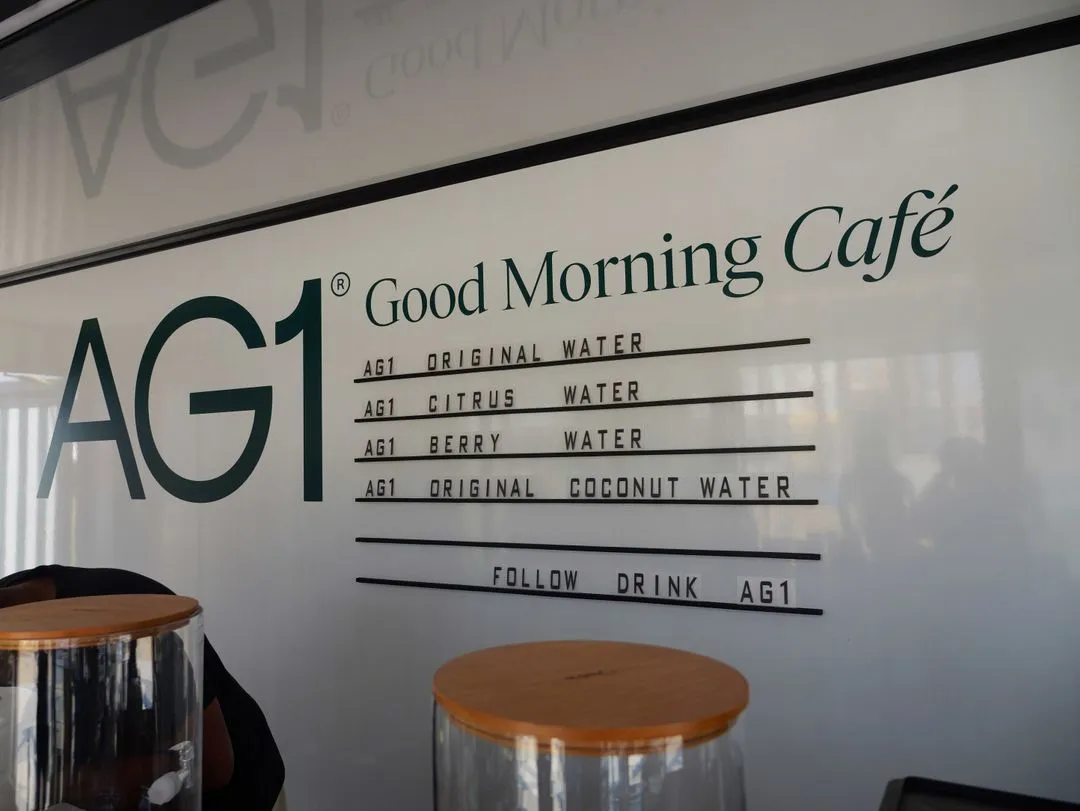
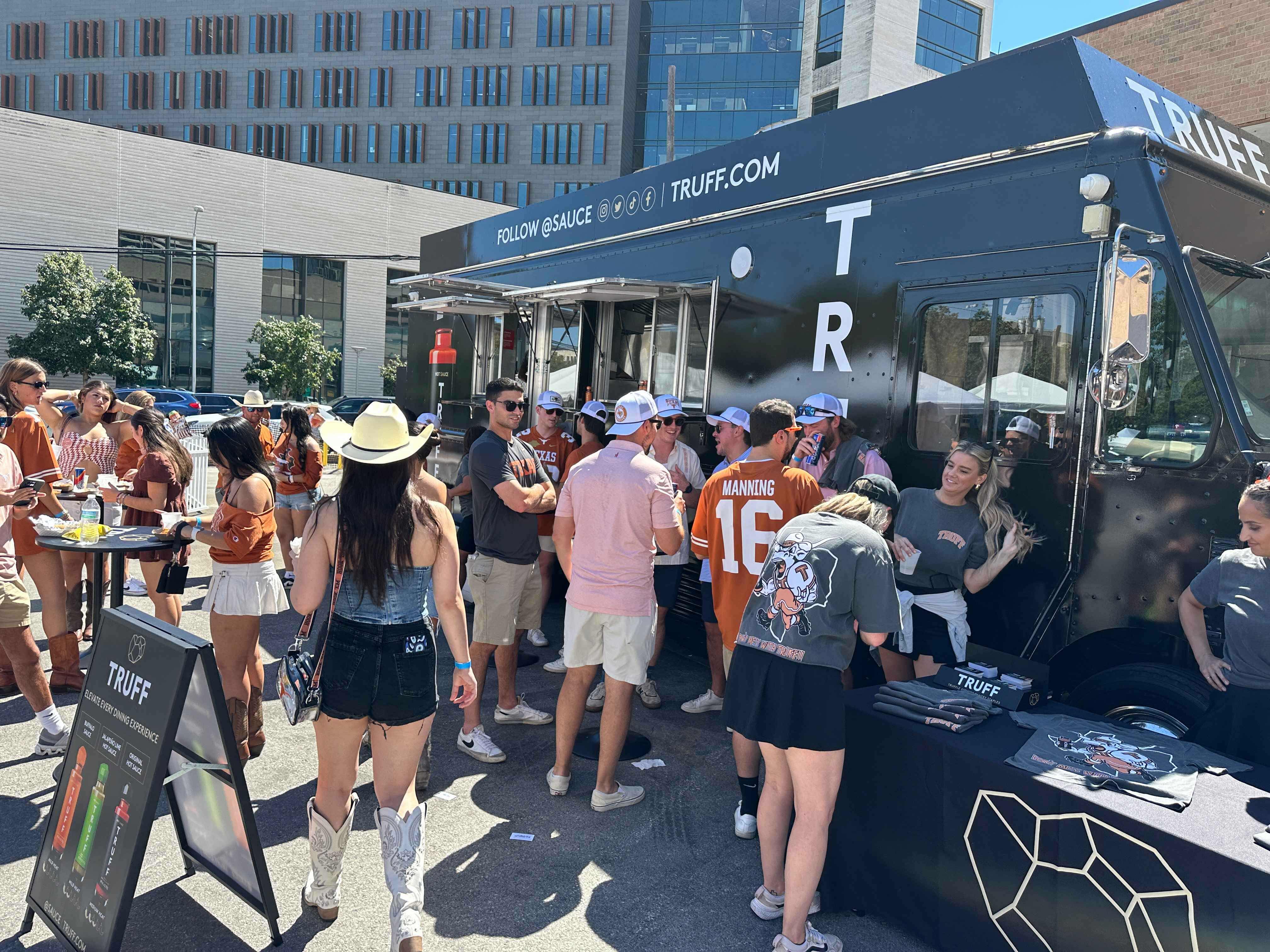
Branded food trucks are custom-wrapped vehicles that serve food or drink while carrying a brand’s identity into places a store can’t reach. Brands use them for product samples, launches, multi-city tours, and one-day events, because the truck draws a crowd a display table never will. Getting one on the road means a build, a wrap, permits, staffing, and a route, and each of those carries its own cost and lead time.
Promobile Marketing has spent over a decade running mobile brand activations for AG1, OLIPOP, Hellmann’s, Knorr, and Lancôme, including Knorr’s branded food trucks , which we designed, built, and ran at key retail locations. We handle fabrication, permits, routing, and culinary production in-house, so the parts that usually go wrong stay with us. Contact us today to get your food truck campaign started.
This article covers what a branded food truck is, what it costs, how to launch one step by step, and how much lead time to allow.
What A Branded Food Truck Actually Is A branded food truck is a working kitchen on wheels wearing your brand instead of a restaurant’s. The vehicle serves something people want, and while they wait, they stand inside your marketing. Customers meet the brand directly instead of through a screen, and few formats manage that while making people glad to stop.
That combination is what makes the format work. A mobile advertising truck earns impressions while it drives, then converts them into conversations once it parks. That is how you create excitement in a street that had none twenty minutes earlier. Brand ambassadors hand over product samples , answer questions, and collect feedback in the same few minutes.
The vehicle itself becomes a blank canvas once you account for the kitchen. Vehicle wrapping covers the exterior, and custom fabrications handle the interior and serving window. Props on or off the truck extend the theme into the space around it. A custom-wrapped food truck can be rebuilt for a new concept between campaigns, so one vehicle serves several launches.
Branded packaging complements the truck's efforts by providing items that customers take with them, such as cups, sleeves, napkins, and product samples. This custom packaging transforms a waiting line into numerous individual brand experiences that spread throughout the city.
Coffee carts and coffee trucks work the same way for beverage brands, and the mechanics carry across to any mobile marketing tour format. A mobile pop-up cafe trades speed for longer conversations, which suits brands that need more than a handover.
People often confuse a branded food truck with food truck promotions , so it’s worth separating them. The promotion is the campaign idea, while the truck is the platform that carries it, and the same vehicle can host entirely different marketing campaigns across a season.
Branded Food Trucks Increase Visibility and Engagement For brands looking to increase visibility, stand out, and connect directly with their audience, branded food trucks offer an unparalleled immersive brand experience.
As these branded food trucks travel through city streets, they not only promote your brand but also serve as a canvas for thematic marketing campaigns.
Mobile Exposure Branded food truck promotions act as moving billboards, providing your brand with massive exposure on your mobile tour.
Unique Experiences The confined space and personal touch create memorable experiences for customers.
Themed Campaigns Fully customized food trucks allow your brand to completely immerse consumers in a specific theme. Wicked Kitchen partnered with Promobile Marketing to provide a unique and creative golden ticket for its special VIP guests to the Wicked Kitchen branded food truck.
What Branded Food Trucks Cost Cost depends on scope more than on the truck itself, so a single number would mislead you. The table below sets out the main drivers and what moves each one, and the figures beneath it come from Promobile’s own project bands.
Cost Driver What Moves It
Vehicle sourcing Buying your own branded vehicle costs most upfront. Leasing or chartering an existing truck lowers entry costs and suits shorter runs. Vehicle wrapping Size of the vehicle, complexity of the artwork, and whether the wrap is full or partial Custom fabrications Serving window changes, interior build, refrigeration, power, and any props built to match the brand vision Culinary production Menu complexity, ingredient cost, and whether food is produced in-house or bought in Staffing How many brand ambassadors per shift, how many days, and whether the team travels between cities Permits Health department approvals, fire inspections, and street or venue permissions in every city on the route Routing and logistics Distance between markets, overnight parking, fuel, commissary access, and driver time Measurement Data capture, reporting, and any case study production afterward
Branded promotion cost varies more than brands expect, and a branded promotion built around a vehicle prices differently from one built around a venue. Promobile’s project bands start at $50,000 and run past $5 million for national programs. A single city, one-day activation with a chartered truck sits at the lower end. A multi-city tour with a purpose-built vehicle, in-house culinary production, and a traveling team sits far above it.
Two costs surprise brands more than the rest, and permits are the first of them. They take more time and money than expected, particularly across multiple cities. Culinary production is a real operating cost, because you’re feeding people all day.
Strategic Flexibility and Reach with Mobile Food Trucks The fast-changing preferences of consumers in the food and beverage space require a nimble and adaptable marketing strategy.
Custom-wrapped food trucks matched to your brand and style guide are the pinnacle of flexibility and reach in marketing campaigns. They can move between various locations and events while focusing on specific demographics, maximizing both impact and engagement.
Whether your brand is tapping into a new market, launching a new product, or conducting location-specific tests, branded food trucks offer an affordable and efficient platform to cast a wide net or zero in on your target audience.
Location Mobility Food trucks can target different demographics and events. We scout different locations to position your brand for maximum impact in high foot traffic areas, drawing the most attention to your brand during your mobile tour.
Affordable Entry Food truck marketing offers a cost-effective marketing platform for a unique mobile experience—especially for startups or brands looking to test new markets.
Sampling and Testing Food trucks are ideal for product launches and giving out samples, facilitating immediate consumer feedback.
Bioré partnered with Promobile Marketing to hand out free samples of their Cover & Conquer blemish patches from a custom-wrapped food truck.
How To Launch A Branded Food Truck Campaign Step By Step The order of these steps matters more than most brands expect, because each one constrains the next. Your objective decides the markets, the markets decide the permits, and the permits decide when you can actually be on the street.
Step 1. Define the Objective and the Markets Start by naming what the campaign has to produce. Trial for a new product, brand recognition in new markets, new leads, or engaging posts for social are all valid objectives, and each one leads to a different truck. Be specific, because a vague brief produces a vehicle that promotes nothing in particular.
Then pick the markets from the objective, never from convenience. A launch aimed at a specific target audience belongs where that audience already gathers, which is rarely the cheapest place to park. Reaching consumers who already buy the category beats reaching more people who never will.
Step 2. Choose Between Buying, Leasing, and Chartering Once the objective is set, the next decision is ownership. Buying your own branded vehicle makes sense for a program running across years. You control the build completely, and the asset stays yours.
Leasing is ideal for a seasonal campaign or an extended tour. Chartering an existing truck with its operator suits one-day events and short runs, and it carries the lowest minimum cost of the three.
Step 3. Design The Wrap And The Build With the vehicle settled, design begins, because wrap artwork has to fit real dimensions. A creative agency or your internal marketing team supplies the brand assets, and the fabrication team adapts them to the panels, curves, and serving window. This stage is where you customize the truck to a specific brand, so it stops looking like a generic vehicle in new paint.
Keep the exterior readable at distance and in motion. A wrap that only works up close wastes the moving billboard entirely, and it does nothing to build excitement before anyone reaches the window.
Step 4. Clear Permits and Health Requirements While the build progresses, permits quietly dictate your calendar. Every city has its own health department requirements, and many require a commissary agreement, a fire inspection, and a separate street or venue permission.
Start the permit process before you finish the build. Brands that handle permits late lose weeks they had allocated to promotion.
Step 5. Staff The Truck Decide who’s cooking and who’s talking, because those are different jobs. Culinary staff keeps service moving, while brand ambassadors handle the conversation, the product samples, and the data capture. The people on the truck are what make the concept real, so they deserve the same attention as the wrap.
Hire ambassadors for temperament and train them on the product. Someone who enjoys talking to strangers will outperform someone who has memorized the script. A reliable partner will provide brand ambassadors who already know how to work a queue, which is a learned skill.
Step 6. Plan Routing and Logistics Routing looks simple on a map and rarely is in practice. You need overnight parking, commissary access, fuel, power, and realistic drive times between cities, plus slack for the day something breaks. A DOT-compliant tour adds driver-hours rules to that list.
Multi-city tours need a route built around permit calendars, not mileage. Choosing mobile tour locations is its own discipline, and the wrong stop in the right city still wastes a day.
Step Seven, Measure What Happened Finally, agree on the measures before the truck rolls. Samples served, conversations held, data captured, social posts tagged, and sales lift in nearby retail all describe something real. Tracking those consistently is what turns one event into an argument for the next.
Photograph the activation properly while it is still running. Those images become the case study that justifies the next campaign. They also give the marketing team the detail needed to brief it.
Ask for more detail than you think you need at this stage. Route notes, service times, queue lengths, and staff observations all matter later, when someone asks why one city outperformed another.
How Much Lead Time Do You Need? That sequence takes longer than most brands assume, so allow three to four months for a straightforward single-city activation using a chartered truck. That covers design, wrap, permits, and staffing without anyone rushing.
A custom-built vehicle requires significantly more time, as the fabrication process can take two to three months after the design is approved. For a multi-city tour, a custom truck realistically needs about six months from the initial discussion to the first day of service.
Permits are the variable that breaks schedules most often. Some cities process applications in days, and others take many weeks, so the slowest market on your route sets the launch date for everyone.
Community and Digital Integration Food truck branding is a great way to create a genuine connection with your community in person and online. Think of food trucks as the bridge between these two worlds.
On the streets, your brand gets a chance to meet and bond with consumers face-to-face. Online, food trucks are a goldmine for fun and engaging posts, photos, and reviews. Weaving a connection between the online and offline world creates a memorable experience for your consumers.
Building Communities & Engagement Food trucks have a unique ability to foster local meet-ups and build a sense of community around your brand or product, which in turn helps to increase brand loyalty.
Hellmann's partnered with Promobile Marketing to travel across the country from Arizona to New Jersey to promote their latest partnership with Feeding America, using an eye-catching glass box truck and hashtags on social media to raise awareness for their campaign.
What Branded Food Trucks Do Well, And Where They Struggle The format has real strengths and real limits, and knowing both stops you buying a truck for a job it can’t do.
Where They Perform Food trucks earn their cost first through sampling at volume. A queue forms naturally, and people accept food from a truck when they’d refuse a sample from a stranger. That queue creates time, and time creates conversation.
And time is what turns transactions into meaningful connections. A brand ambassador with ninety seconds can answer a real question, add a personal touch and hand over branded items the customer actually keeps. Repeat that across a season and you’re building loyal customers, not just counting samples.
They also travel, which a fixed installation can’t. One vehicle can cover multiple cities in a season, so they suit brands entering new markets or supporting retail distribution across a region.
The visual return matters as much as the sampling. A wrapped vehicle earns impressions every mile it drives, and a well-designed truck produces the kind of photograph visitors post without being asked.
Where They Struggle Weather is the most obvious limitation, because an outdoor format loses its audience to rain in a way an indoor activation doesn’t.
Throughput is the limitation brands notice later, since a kitchen can only serve so many people an hour. At a large festival, a truck will turn people away unless the menu is built for speed.
Cost per interaction also runs higher than a table. The format earns that premium through depth and photography, which is why the objective set in step one matters so much.
Ready To Put A Branded Food Truck On The Road? A branded food truck turns a marketing budget into something people queue for, taste, and photograph, which is a rare combination in any channel. Done well, it delivers trial, brand recognition, and content from the same afternoon, and it can create memorable experiences that customers still talk about long after the truck has moved on. Done without a permit plan, it becomes an expensive vehicle parked in the wrong city.
Promobile Marketing has built, wrapped, staffed, and toured branded food trucks for Hellmann’s, Knorr, and Lancôme, with fabrication, culinary production, event production, and permitting all handled in-house. Our experiential marketing professionals will tell you honestly whether a food truck fits your objective or whether another format would serve it better. Contact us today with your markets and your timeline, and we’ll tell you what’s realistic.