A multi-city road show is a series of live marketing events hosted in multiple locations and run as a single program . Brands use the format to put a product in people’s hands across many markets at once, then feed what they learn in each city back into the next stop. Done properly, it delivers trial, regional insight and sales momentum that one flagship event in one city cannot match.
Promobile bootstrapped this company from a singbele burger truck in New York City into a national experiential agency, and the programs we run now move at real scale, including a 27-week Yerba Madre tour covering 30 cities and 154 college campuses that put 324,000 samples in consumers’ hands. The mobile brand activations team at Promobile Marketing owns route planning, permits, vehicle build, staffing and nightly reporting, so one group is accountable from the first city to the last. Contact us to talk through what a route for your brand would look like.
This article explains what a multi-city road show is, the main types of roadshows and how they differ, how to plan and run one stage by stage, and the factors that decide whether the program works.
What Is a Roadshow, and What Makes One Multi-City? A roadshow takes a brand on the road to meet potential customers in their own cities, in the places where they already gather. Beaches, festivals, business districts, retail lots, and college campuses all work. The format functions as a mini storefront that travels, smaller than a flagship store and more focused than a trade show booth, built to teach somebody about one product in a few minutes.
What makes it multi-city is the program logic, not the mileage. A brand that shows up in six cities with six different builds, six different scripts, and six different goals has run six events. A multi-city road show is one event repeated with controlled variations, which is the single most useful way to think about the format. The branding holds. The demo holds. The reporting holds. What changes is the market, the partner, and the local detail.
That distinction matters because it decides your cost curve. When the format repeats, the third city is cheaper and sharper than the first. When it does not, every stop is a new build, and the program gets harder as it goes.
Types of Roadshows and How They Differ The word covers several formats that share a skeleton and little else. A CPG sampling tour and an investor relations roadshow both move a message between cities, but almost every practical decision inside them differs, from venue to staffing to the number that defines success.
The table below sets out the main types and what separates them. Read it as a way to name what you are actually planning, because a program judged on samples distributed should not be built like one judged on qualified meetings.
Type of roadshow Primary audience Typical venue Typical length Judged on
CPG sampling tour General consumers Festivals, retail lots, parks, beaches Several weeks to several months Samples distributed, trial, impressions Retail roadshow In-store shoppers Warehouse and big-box retail floors About four days per store Units sold per day College campus tour Students and young adults Campuses, athletic events, quads A full semester or academic year Trial, sign-ups, brand affinity Investor relations roadshow Analysts and institutional investors Hotels, offices, financial centers One to three weeks Meetings held, capital raised Seminar and education tour Trade and professional audiences Conference rooms, venues, showrooms A few days to a few weeks Attendance, qualified leads B2B dealer or channel tour Distributors and partners Dealer sites, regional hubs Several weeks Orders, partner activation
Retail roadshows are worth a note because they set expectations for everything else. A Costco roadshow typically runs about four days in one warehouse, long enough to build word of mouth on the floor and short enough to stay an event rather than a fixture. That rhythm, a short concentrated burst repeated in a new place, is the pattern underneath most of the other formats too.
Why Multi-City Road Shows Matter Face-to-face contact does one job better than any other channel, which is building trust quickly. Somebody who has met your staff, asked an awkward question, and gotten a straight answer holds a different view of your brand than somebody who scrolled past an ad. Live demonstrations compress that further. Watching a product work, or tasting it, often moves a person straight to a purchasing decision.
A stop also creates urgency in a way an always-on channel cannot. The truck is here today and gone tomorrow, which gives people a reason to act now rather than later, and it lets your staff connect with someone and finish their product education inside a single conversation. That combination of tailored content and a live audience is why the format drives fast sales while still gathering honest reactions.
The format also fixes a coverage problem. Large conventions gather a big audience once a year in one city, and everyone who cannot travel that week is simply absent. A roadshow inverts that arrangement by going to them instead. Smaller regional stops tend to improve attendance and engagement for the same reason: you have already taken the flight, booked the hotel, and taken the days off work to attend.
Then there is what you learn. Every stop is a live regional market test. The objections you hear in Sacramento are not the same as those you hear in Austin, and the flavors that are popular on the Gulf Coast are not the same as those that are popular in the Pacific Northwest. That insight arrives while you can still act on it, which is faster than any research program can manage. Targeted market penetration works the same way, letting you address a local challenge in the one region where it exists instead of writing national messaging around a problem three cities have.
There is a sustainability argument as well, and it is more than a talking point. Transportation is the largest single source of greenhouse gas emissions in the United States, at 28 percent of the national total in 2022 according to the Environmental Protection Agency . A tightly routed program that moves a small crew and one vehicle between nearby markets carries a lighter footprint than flying a national audience into a single hub, and choosing electric vehicles cuts it further. Our Yerba Madre tour ran on branded Rivian EVs for exactly that reason.
How to Plan a Multi-City Roadshow Planning breaks into eight stages, and the first step is accepting that each one produces something the next stage needs. Working out of order is where programs lose weeks. Logistical planning and stakeholder engagement run through all eight, because the people who sign off internally need to stay as informed as the crew on the road.
Stage 1. Set a Measurable Goal Decide the one number that defines success before anything else is booked. Samples distributed, units sold, leads captured, demos completed, or meetings held. A program with a vague purpose produces vague reporting, and vague reporting is how successful roadshows get canceled by finance. Write the number down and make sure everyone on the crew can say it out loud.
Stage 2. Choose Markets and Build the Route Start with the audience rather than the map. Work out which personas you want, then find where those people actually are. Around 86 percent of the United States population lived in metropolitan statistical areas in 2020, up from 85 percent a decade earlier, according to the Census Bureau , which is why a metro-clustered route reaches most of the country without crossing all of it.
Then build in clusters. Texas gives you a tight run between Dallas, Houston and Austin, TX. California splits into a southern group and a northern one that rarely belong on the same leg. The Northeast puts New York, NY, Philadelphia and Boston inside a week, and Illinois anchors a Midwest swing that would be expensive to build around any other city. Working coast to coast is possible, but the honest version of that trip has long empty stretches in it, and you should decide in advance whether those transit days are dead cost or a chance to add a small stop close to the route. Timing carries the rest. A July program in Phoenix is a different animal from a July program in Portland, and the local calendar, festivals, move-in week and regional attractions all decide whether a crowd is already out and ready to explore.
Stage 3. Design a Format You Can Repeat Standardize everything that carries the brand, which means the footprint layout, the demo script, the signage, and the way staff opens a conversation. Vary only what the market forces you to change. Consistent branding across locations means a customer who sees you in two cities sees one brand, and your crew stops relearning the job every Monday. Smaller venues help here more than people expect, because they cut travel and logistics costs and a room that is full at 60 people reads better than a hall that is empty at 200. Test the format once before the route starts and keep whichever version fits your product rather than whichever looked most appropriate in the deck.
Stage 4. Select the Vehicle and Build the Footprint Vehicle selection sets your ceiling, so choose it against the tightest venue on your route rather than the most appealing rendering. A box truck that opens into a stage gives you presence and a long setup. A sprinter gives you speed and a smaller shadow. An Airstream gives you something people photograph, which is how the OLIPOP OLISHOP worked as a pineapple-themed gullwing build for the SpongeBob partnership.
Inside the footprint, design the booth as a mini-funnel. Something at the perimeter stops a person walking past, a middle zone where staff explain and demonstrate, and a back zone where the sample, the purchase, or the sign-up happens. When the zones are clear, the line keeps moving, and a line that moves is a line people will join. Bring the tools to fix things, because a crew that can transform a bare lot into a working showroom in 45 minutes has usually earned that by carrying its own power, its own flooring, and a spare of everything that plugs in. What you offer at that back zone, whether a sample, a discount code, or a photo, is what people carry home.
Stage 5. Clear Permits and Compliance Every jurisdiction treats a commercial activation differently, and the gap between the easiest and hardest cities on one route can run to months of lead time. Check requirements for the exact site rather than the city in general, since a private lot, a public park, and a sidewalk are three separate applications with three separate answers. Food and sampling add another layer. The FDA Food Code is a model that state, local, tribal, and federal regulators each adapt to their own rules, which is precisely why sampling permissions differ from one city to the next. Vehicle compliance is part of the process, and running a DOT-compliant mobile tour is not optional once you cross state lines. Our experience securing permits for marketing tours is that the paperwork is never the tedious part of the job, but it is the part that cancels stops.
Stage 6. Staff and Train the Tour Staffing is the line item people cut first and regret most. You are hiring defined roles, not bodies. Somebody owns the demo, somebody owns the crowd at the perimeter, and somebody owns the numbers at the end of the night. Written roles let travelling team members and local hires who join for a single stop work together without burning the first two hours on a briefing. Training happens before you leave rather than on the road, using short workshops that cover the product, the objections, and the reporting, so a group of strangers arrives sounding like one brand.
Staff should be prepared to address challenging questions, maintain politeness when someone is not interested, and transition smoothly to the person conducting the demo. The way we approach brand activation staffing treats that crew as the product experience because, to the person in line, they are. Behind them sits the support layer that books hotels, chases permits, and answers the phone at six in the morning when a generator will not start.
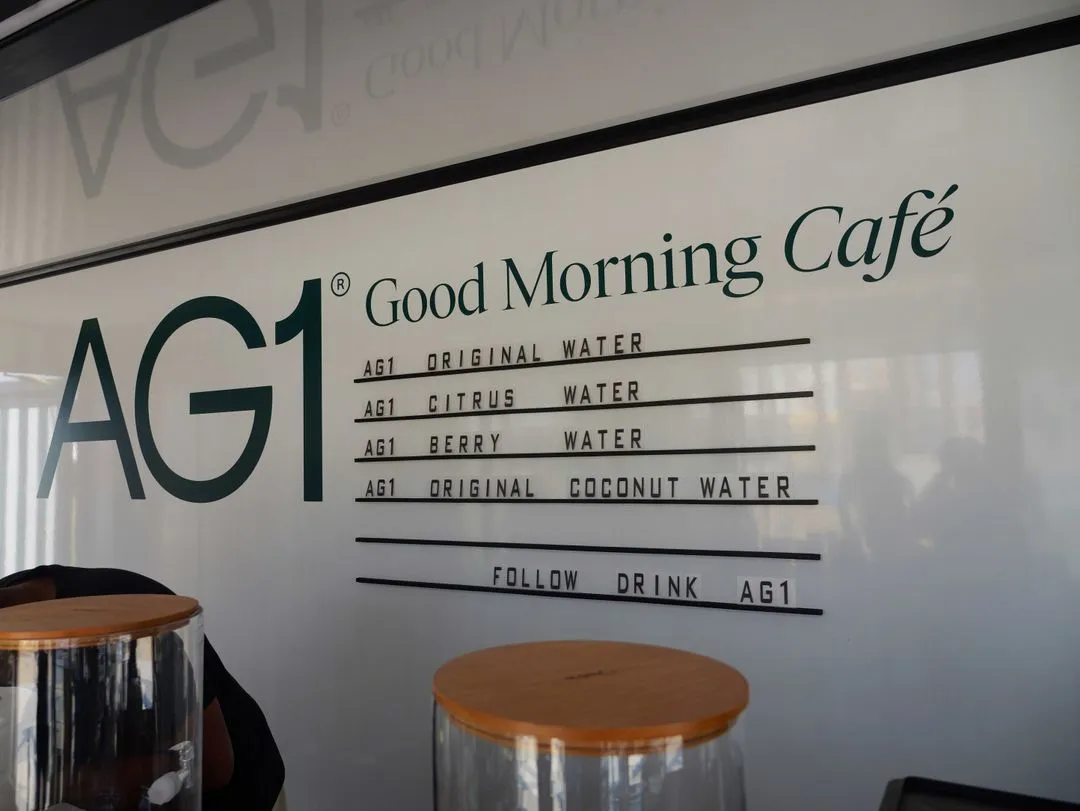
Stage 7. Promote Each Stop Locally A roadshow nobody knows about is an expensive private party. National awareness does not tell somebody in Tucson which parking lot to walk to on Saturday, so promotion has to be local and specific. Local partnerships do the heavy lifting and add credibility that paid media cannot buy. Our AG1 Good Morning Café program operated in this manner. Each stop was programmed around local run clubs, surf sessions, mobility classes, and wellness partners as the mobile café moved from Venice Beach to Los Angeles, Chicago, and Boston.
Arts organizations and cultural venues attract an engaged crowd that shows up for events. Community clubs and membership groups circulate a stop to people who trust the recommendation, and charity fundraisers give the visit a purpose beyond selling. People who participate in something tend to remember the brand that made it possible, and an enjoyable afternoon they chose to attend beats an ad they sat through. That is what turns a stop into an unforgettable experience rather than a mere transaction, and it is the part that people share with others.
Stage 8. Execute and Report Daily Report every night, from every stop, without exception. Tracking units sold hourly distinguishes a professional program from an expensive one, revealing which hours need staffing, identifying underperforming markets with fixable issues, and highlighting the effective demographic. Collect feedback while it is fresh, from both the crowd and the crew, so that city two can build on what city one learned. By the final stop, the program should be visibly sharper than it was on day one. Our approach to measuring brand activation impact treats that nightly number as the deliverable, not as admin.
Factors That Determine Whether a Roadshow Succeeds
Most programs fail for the same small set of reasons, and none of them are creative. These five factors are goal clarity, route density, format discipline, staffing, and measurement. In almost every case where performance came in under plan, one of those five was the thing that slipped.
City selection is the most important decision, so it deserves a scorecard rather than an instinct. Score each candidate market against the criteria below, then look at the totals instead of at which cities sound exciting.
Criterion What to check Why it decides the stop
Audience density Share of your target personas in the metro A thin market costs the same to run as a thick one. Venue access Available places with power, space, and foot traffic A strong city with no workable site is not a stop. Permit difficulty Lead time and cost for that exact location Some cities need 90 days; others need a week. Travel leg Drive hours from the previous city Long legs eat days you could be selling. Seasonal fit Weather and the local calendar in your window The wrong month produces the wrong turnout. Local partner Whether a credible partner exists nearby Partners arrive with an audience already attached. Retail presence Whether the product is stocked in that market The trial converts badly if nobody can buy afterwards
Sid Burgos, Field Operations Manager at Promobile, puts the staffing piece plainly. “The thing brands underestimate is that the tour is only as good as the person handing somebody the sample,” he says. “On the Yerba Madre run we were in 30 cities and 154 campuses, and the stops that overperformed were never the ones with the optimum weather. They were the ones where the crew knew the product cold and could hold a real conversation for four minutes.”
The other quiet factor is what happens after the vehicles drive home. A roadshow is built to strengthen relationships and sustain momentum, so the follow-up email, the retargeting, and the retail push into those same markets belong to the program rather than to somebody else’s quarter.
Location Characteristics Location characteristics such as climate, demographics, population density, and income levels influence the success or failure of a roadshow. Even within the market you've selected, some neighborhoods or areas will be better or worse for the event due to traffic patterns, visibility, accessibility, space, and potential disruptions. All of this is why choosing a location requires more analysis than simply identifying markets with a high concentration of people the same age as the target audience. For example, are there climates or regions where your products connect with local traditions or satisfy a unique need?
A recent tour by beauty brand Amika took this approach when the brand chose cities for its newest hair care product, an anti-frizz treatment. The brand's “frizz mobile” targeted consumers in four famously humid American cities — Nashville, Austin, Houston, and Miami — to promote the product to its target audience.
Promoting the Tour Roadshows can travel almost anywhere, expanding brand recognition into cities and regions previously untouched by the brand's experiential marketing efforts. But flexibility and range mean little, and even the most fantastic experience falls flat if nobody shows up.
The solution? Use social media channels and existing marketing efforts to promote your tour and keep energy high throughout its duration.
Create unique hashtags for the event, and use them in every social media post from before the tour to the very last stop. Personal care brand Dove made heavy use of the hashtag #BigPitEnergy to promote its roadshow to young women attending music venues. The campaign ultimately handed out some 167,500 samples of its deodorant to women in LA, NYC, and Gulf Shores, Ala.
What Multi-City Road Shows Look Like in Practice Numbers make the format concrete, and these come from tours we have run .
Liquid I.V. asked us to hydrate a million Americans in one summer and put it on wheels. We built a fleet of two Hydratrucks with custom wrapping and a self-sustaining hydration system developed with HOPE Hydration, then let consumers request Sip Stops so the trucks visited towns that asked for them. That program delivered more than 1.1 million sticks sampled across 160 live activation days in 15 cities.
Yerba Madre needed a college tour that refreshed the brand and drove trial at scale. The 27-week program covered 30 major cities and 154 campus stops using branded Rivian EVs, mixing campuses with tentpole festivals and fitness hubs. It distributed 324,000 samples, beating the goal, and generated 884,600 tour impressions.
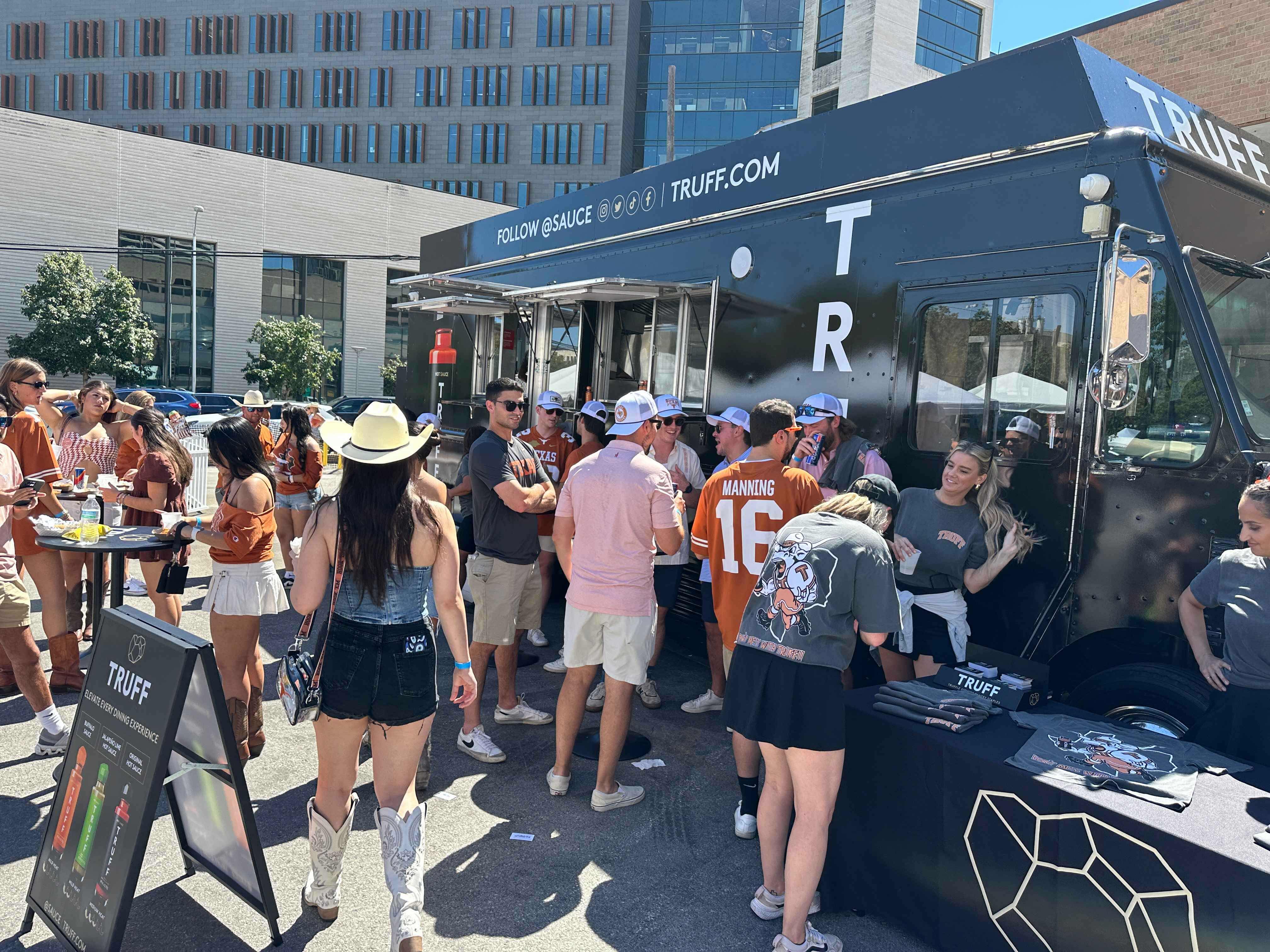
Not every activation needs a national footprint, and it's worth noting. TRUFF wanted to feed Longhorns fans on game day in Austin, so we deployed a wrapped truck with an onboard kitchen run by our culinary lead John LoCascio and served 900 hot meals with more than 25,000 visual impressions from a single high-traffic location. The build logic is identical. Only the number of cities changes.
So What Does It Actually Take to Run a Multi-City Road Show? It takes one clear number, a route that respects the map, a build you can repeat, a crew who know their roles, and a report filed every night. The creative gets attention, but a multi-city road show is a logistics job wearing a marketing costume, and the programs that hit their targets are the ones that treat it that way. Everything in this article, from the city scorecard to nightly reporting on units per hour, comes back to that one idea of running a single event repeated with controlled variations rather than a scattering of separate ones. Get that right, and the tour gets sharper with every stop instead of more expensive.
Ready to Take Your Brand on the Road? A well-run multi-city road show puts your product in the hands of people who would never have tried it otherwise, in the markets where it matters most to your sales. It gives you trial, regional insight, and a nightly read on what is working while you can still act on it. If people need to experience something before buying it, a tour is the fastest way to do that at scale.
Our experiential marketing professionals have taken brands from a single game-day tailgate in Austin to a 27-week route across 30 cities and 154 campuses, handling the route, the permits, the build, the staffing, and the reporting on every one. The same team runs our CPG sampling programs and full mobile marketing tours from the Brooklyn shop where the company started. Contact Us Today , and we can map out what a route for your brand would actually look like.